


Showing posts with label tutorial. Show all posts
Showing posts with label tutorial. Show all posts

Remeber those old Typewriters, they make sound everytime when you press any key. So here is a small program KCLICK that will certainly make typing a fun and its very appeling to typewriter users.
If KClick is active and you're using the keyboard to edit documents, each time you press a key you will hear a sound. Actually there are 5 soundsOne of them sounds like a typewriter, others sound like organizer beeps.
The main window contains a checkbox (to turn your sounds on) and a test edit box. Clicking in the circles (check boxes) to the left of the sound choices will let you hear those sounds. To use your sound, click the Active checkbox to enable the keyboard click.
You can download it free. Here is link for downloading kclick free.. have fun..
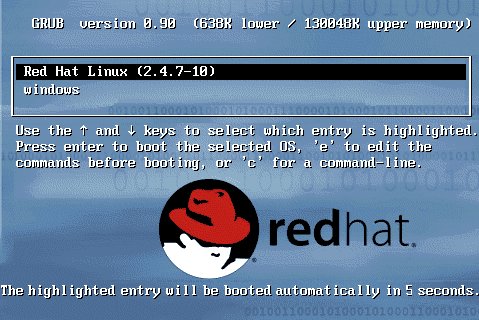
As we kno, hacking a Linux password is like hitting a ball for six.
Its so easy, bt sumtimes the admins use GRUB password which hardens the security.
But wonder, what if we can hack it as well.
So, ladies and gentlemen, here v go.
THis is the tweak..
GO, follow these steps and hack the charts..
1- Boot system with cd/dvd of RHEL.
2- At splash screen type
boot:linux rescue
3- Choose language, choose keyboard, choose no network setup.
4- Press continue, >>> ok.
5- Type following:
#chroot /mnt/sysimage
#vi /etc/grub.conf
6- Remove that password line that v created ago.
Thats it, n u r finished.
Watsay?
Queries and commenting wud be appreciated as usual.

Have you ever wondered that whether your friend read your mail or not? He/she is not replying or didnt see your mail. Wheteher your important mail reach to its destination. If yes then here is Spypig for you.
Spypig is a cool email tracking system that sends you a notification mail whenever recipient read your mail.
Its very simple to use just follow these steps:
1). Open www.spypig.com .
2). Here enter your Email id and message title.
3). It provides special image which contains tracking code, select 1 of the image provided. If you dont want that your recipient know about this tracking then select blank (white) image provided
there.
4). Select no of notifications you want and then press activate.
5). Now it will generate an image copy that image in your mail.
6). Send it.
Its done.
Now whenever your recipient open that mail you will got a notification email.
Do you know that you cant make a folder named as "con" or "prn". If u dnt believe then try to rename a folder give its new name con. It will give error that 'Specified Device name is invalid'. There are many words like con. Some of are them PRN, AUX, CLOCK$, NUL, COM1,
COM2,COM3, COM4, COM5,COM6, COM7, COM8, COM9, LPT1, LPT2,
LPT3, LPT4,LPT5, LPT6,LPT7, LPT8, LPT9.

Now for deleting it Type
rd \\.\d:\con
COM2,COM3, COM4, COM5,COM6, COM7, COM8, COM9, LPT1, LPT2,
LPT3, LPT4,LPT5, LPT6,LPT7, LPT8, LPT9.
These words are windows inbuilt reserved device names. so we cant use them.
But here I provide you a trick by which you can name a folder by any of the above specified names, So go n challenge your friends and prove your superiority..
Here is solution, follow these steps:
1) Open Command Prompt (Type cmd in Run).
2) Type md \\.\d:\con to create a con folder in d drive, You can replace d with any drive .
Its done.
Now for deleting it Type
rd \\.\d:\con

If you use pendrives frequently and find bit typical to click on the task bar and then safely remove the pendrive then here is a trick for you to create a shortcut for safely removal of pendrives. Just follow given steps:
2). In Create shortcut window, Type RunDll32.exe shell32.dll,Control_RunDLL hotplug.dll.

3). Click next and then .
shortcut is created.
Now you can use this shortcut to remove pendrive or you can assign a shortcut key to it.
For assigning shortcut key,
For assigning shortcut key,
1). Right click on shortcut icon.
2). Select properties.
3). In properties window, click on shortcut tab.
4). Assign a shortcut key to it(it will take clrt + alt by default)eg: if you press A shortcut will be ctrl+alt+A.

5). Click ok.
Its done.
Now you can use your keyboard shortcut key to safely remove your pendrives.

If you have multiple Google accounts—a Gmail with Google Apps account and a regular Gmail account, for example—streamline them with this script for Firefox with Greasemonkey. The script adds a “change user” drop-down bar in place of the “sign out” link.
If you want to know that your particular friend is online and invisible or he/she is offline. Then here is an easy way to find this :
Open your gtalk application and type this email address of your friend in top search textbox
Click his/her profile, it opens in new chatting window.
Click on the down arrow button in the top right corner of the window, here ther is one option Go off the record, click on it.

And then leave any msseage to your friend.
If you get a red text showing the person is offline , can’t receive the message right now that means person is offline and if you dnt recieve such kind of any message then your friend is invisible

If you chat very frequently with one of your friend then now you can make gtalk chat shortcut on your desktop. It willl initiate a chat with only one click. On click it opens a chat window where you can chat with your friend. But unfortunately this trick works only in window xp nt in window vista.
Here are steps to follow:
1) Right click on your desktop and go to New > Shortcut.
2) In create shortcut window, type gtalk:chat?jid=username@gmail.com. Where username is gmail id of your friend.
3) Click ok.
Its done.
You can also make shortcut to call your friend for that you have to writegtalk:call?jid=username@gmail.com.
You can create a keyboard shortcut that can automatically open a folder, a program or a word file or any application or browser through your keyboard even when you have other windows like Internet explorer, Office maximized. This is very simple trick and very usful save lots of time. Here are steps:
1). Create a shortcut of the folder / program / file on the desktop.
2). Right click the shortcut on the desktop, and then click Properties.
3). In the Properties dialog box, click the Shortcut tab.
4). Now in the Shortcut key textbox, enter a key combination for example CTRL+ALT+R or CTRL+SHIFT+R or whatever you like.

Its done.
Now when you hit the key combination just specified, the folder / program / file will open even if other program windows are maximized.

Here are list of some useful DOS commands. May be you know some of them and dnt know others. So just go through them.
a
ARP Address Resolution Protocol
ASSOC Change file extension associations.
ASSOCIAT One step file association.
AT Schedule a command to run at a later time.
ATTRIB Change file attributes.
b
BOOTCFG Edit Windows boot settings.
BROWSTAT Get domain, browser and PDC info.
CACLS Change file permissions.
CALL Call one batch program from another.
CD Change Directory - move to a specific Folder.
CHANGE Change Terminal Server Session properties.
CHKDSK Check Disk - check and repair disk problems.
CHKNTFS Check the NTFS file system.
CHOICE Accept keyboard input to a batch file.
CIPHER Encrypt or Decrypt files/folders.
CleanMgr Automated cleanup of Temp files, recycle bin.
CLEARMEM Clear memory leaks.
CLIP Copy STDIN to the Windows clipboard.
CLS Clear the screen.
CLUSTER Windows Clustering.
CMD Start a new CMD shell.
COLOR Change colors of the CMD window.
COMP Compare the contents of two files or sets of files.
COMPACT Compress files or folders on an NTFS partition.
COMPRESS Compress individual files on an NTFS partition.
CON2PRT Connect or disconnect a Printer.
CONVERT Convert a FAT drive to NTFS.
COPY Copy one or more files to another location.
CSCcmd Client-side caching (Offline Files).
CSVDE Import or Export Active Directory data.
d
DATE Display or set the date.
Dcomcnfg DCOM Configuration Utility.
DEFRAG Defragment hard drive.
DEL Delete one or more files.
DELPROF Delete NT user profiles.
DELTREE Delete a folder and all subfolders
DevCon Device Manager Command Line Utility.
DIR Display a list of files and folders.
DIRUSE Display disk usage.
DISKCOMP Compare the contents of two floppy disks.
DISKCOPY Copy the contents of one floppy disk to another.
DISKPART Disk Administration.
DNSSTAT DNS Statistics.
DOSKEY Edit command line, recall commands, and create macros.
DSADD Add user (computer, group..) to active directory.
DSQUERY List items in active directory.
DSMOD Modify user (computer, group..) in active directory.
e
CHO Display message on screen.
ENDLOCAL End localisation of environment changes in a batch file.
ERASE Delete one or more files.
EXIT Quit the current script/routine and set an errorlevel.
EXPAND Uncompress file.
EXTRACT Uncompress CAB files.
f
FC Compare two files.
FIND Search for a text string in a file.
FINDSTR Search for strings in files.
FOR /F Loop command: against a set of files.
FOR /F Loop command: against the results of another command.
FOR Loop command: all options Files, Directory, List.
FORFILES Batch process multiple files.
FORMAT Format a disk.
FREEDISK Check free disk space (in bytes).
FSUTIL File and Volume utilities.
FTP File Transfer Protocol.
FTYPE Display or modify file types used in file extension associations.
g
GLOBAL Display membership of global groups.
GOTO Direct a batch program to jump to a labelled line.
HELP Online Help.
i
IF Conditionally perform a command.
IFMEMBER Is the current user in an NT Workgroup.
IPCONFIG Configure IP.
k
KILL Remove a program from memory.
l
LABEL Edit a disk label.
LOCAL Display membership of local groups.
LOGEVENT Write text to the NT event viewer.
LOGOFF Log a user off
LOGTIME Log the date and time in a file
MAPISEND Send email from the command line.
MBSAcli Baseline Security Analyzer.
MEM Display memory usage.
MD Create new folders.
MKLINK Create a symbolic link (linkd).
MODE Configure a system device.
MORE Display output, one screen at a time.
MOUNTVOL Manage a volume mount point.
MOVE Move files from one folder to another.
MOVEUSER Move a user from one domain to another.
MSG Send a message.
MSIEXEC Microsoft Windows Installer.
MSINFO Windows NT diagnostics.
MSTSC Terminal Server Connection (Remote Desktop Protocol).
MUNGE Find and Replace text within file(s).
MV Copy in-use files.
n
NETDOM Domain Manager.
NETSH Configure network protocols.
NETSVC Command-line Service Controller.
NBTSTAT Display networking statistics (NetBIOS over TCP/IP).
NETSTAT Display networking statistics (TCP/IP).
NOW Display the current Date and Time.
NSLOOKUP Name server lookup.
NTBACKUP Backup folders to tape.
NTRIGHTS Edit user account rights.
p
PATH Display or set a search path for executable files.
PATHPING Trace route plus network latency and packet loss.
PAUSE Suspend processing of a batch file and display a message.
PERMS Show permissions for a user.
PERFMON Performance Monitor.
PING Test a network connection.
POPD Restore the previous value of the current directory saved by PUSHD.
PORTQRY Display the status of ports and services.
PRINT Print a text file.
PRNCNFG Display, configure or rename a printer.
PRNMNGR Add, delete, list printers set the default printer.
PROMPT Change the command prompt.
PsExec Execute process remotely.
PsFile Show files opened remotely.
PsGetSid Display the SID of a computer or a user
PsInfo List information about a system.
PsKill Kill processes by name or process ID.
PsList List detailed information about processes.
PsLoggedOn Who's logged on (locally or via resource sharing).
PsLogList Event log records.
PsPasswd Change account password.
PsService View and control services.
PsShutdown Shutdown or reboot a computer.
PsSuspend Suspend processes.
PUSHD Save and then change the current directory.
q
QGREP Search file(s) for lines that match a given pattern.
r
RASDIAL Manage RAS connections.
RASPHONE Manage RAS connections.
RECOVER Recover a damaged file from a defective disk..
REG Registry: Read, Set, Export, Delete keys and values.
REGEDIT Import or export registry settings.
REGSVR32 Register or unregister a DLL.
REGINI Change Registry Permissions.
REM Record comments (remarks) in a batch file.
REN Rename a file or files.
REPLACE Replace or update one file with another.
RD Delete folder(s).
RMTSHARE Share a folder or a printer.
ROBOCOPY Robust File and Folder Copy.
ROUTE Manipulate network routing tables.
RUNAS Execute a program under a different user account.
RUNDLL32 Run a DLL command (add/remove print connections).
s
SC Service Control.
SCHTASKS Create or Edit Scheduled Tasks.
SCLIST Display NT Services.
SET Display, set, or remove environment variables.
SETLOCAL Control the visibility of environment variables.
SETX Set environment variables permanently.
SHARE List or edit a file share or print share.
SHIFT Shift the position of replaceable parameters in a batch file.
SHORTCUT Create a windows shortcut (.LNK file).
SHOWGRPS List the NT Workgroups a user has joined.
SHOWMBRS List the Users who are members of a Workgroup.
SHUTDOWN Shutdown the computer.
SLEEP Wait for x seconds.
SOON Schedule a command to run in the near future.
SORT Sort input.
START Start a program or command in a separate window
SU Switch User.
SUBINACL Edit file and folder Permissions, Ownership and Domain
SUBST Associate a path with a drive letter.
SYSTEMINFO List system configuration.
t
TASKKILL Remove a running process from memory.
TIME Display or set the system time.
TIMEOUT Delay processing of a batch file.
TITLE Set the window title for a CMD.EXE session.
TLIST Task list with full path.
TOUCH Change file timestamps.
TRACERT Trace route to a remote host.
TREE Graphical display of folder structure.
TYPE Display the contents of a text file.
u
USRSTAT List domain usernames and last login.
v
VER Display version information.
VERIFY Verify that files have been saved.
VOL Display a disk label.
w
WHOAMI Output the current UserName and domain.
WINDIFF Compare the contents of two files or sets of files.
WINMSD Windows system diagnostics.
WINMSDP Windows system diagnostics II.
x
XCACLS Change file permissions.
XCOPY Copy files and folders.


